
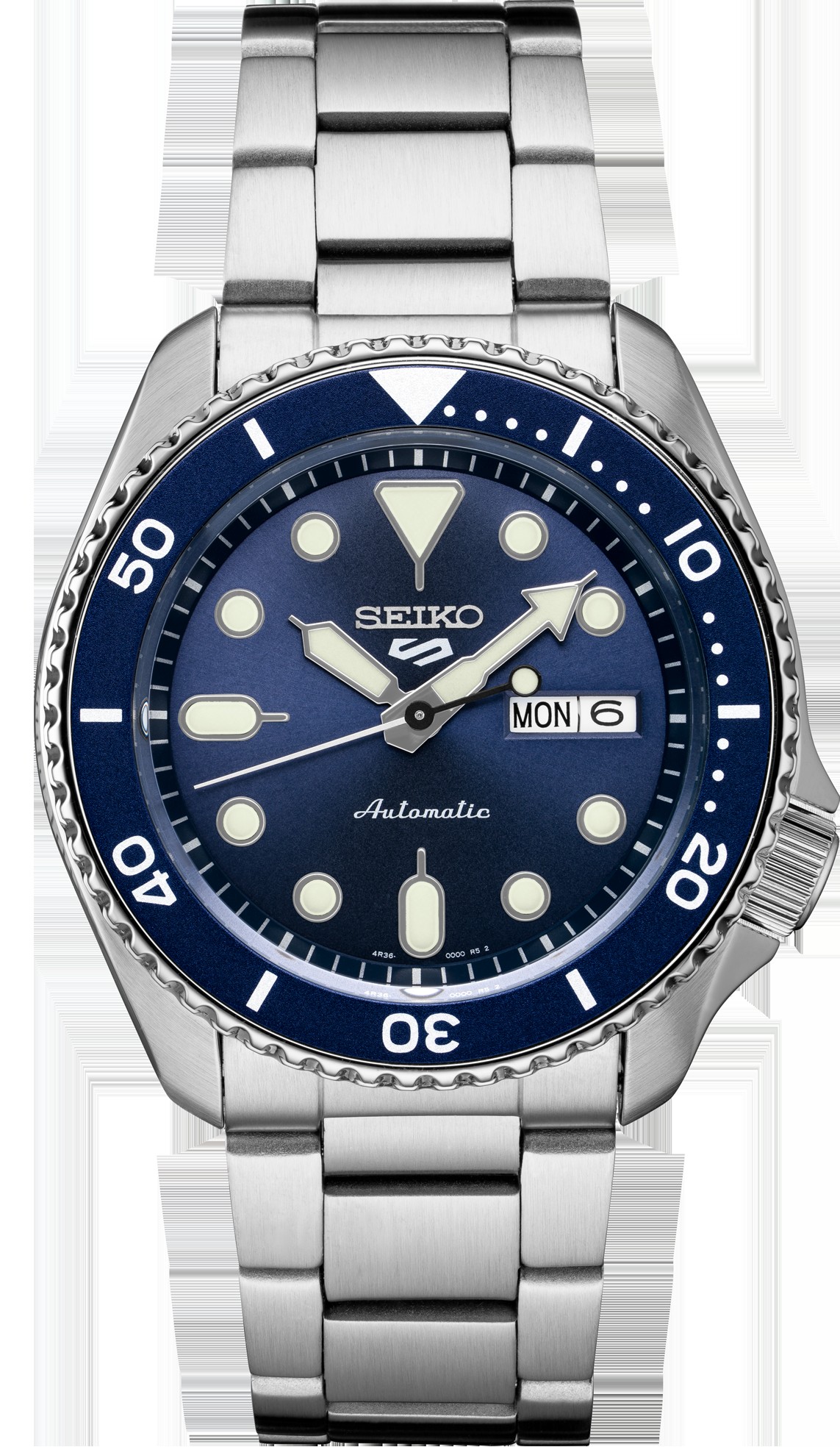
Choose Seiko if you want a traditional mechanical or Spring Drive watch with heritage design language — the Seiko 5 Sports, Prospex, and Presage lines offer genuine watchmaking craft from $350. Choose Casio if you need serious shock-resistance, solar charging, GPS time-sync, or a digital-first sports instrument — the G-Shock and Pro Trek lines punch far above their price. The two brands barely overlap: Seiko is Japan’s answer to Swiss watchmaking; Casio is Japan’s answer to mission-critical electronics.
Brand Heritage & Philosophy
Seiko and Casio were both born in Japan, but they represent fundamentally different answers to the question of what a watch should be. Seiko, founded in Tokyo in 1881 by Kintaro Hattori, started as a watch retailer and became a manufacturer by 1892. Over more than a century, Seiko built a reputation for technical firsts — the world’s first quartz watch (Astron, 1969), the world’s first GPS solar watch (Astron GPS, 2012), and the uniquely Japanese Spring Drive movement, which combines a mechanical mainspring with a quartz-regulated tri-synchro regulator to achieve a glide-smooth seconds hand that no other brand can replicate.
Casio took a different path. Founded in 1946 by Tadao Kashio, the company built its early reputation on calculators and electronic consumer products. Its watch division launched in 1974, and by 1983 Casio had created the G-Shock — a watch designed to survive a drop from a 10-metre height, withstand 10 bars of water pressure, and keep running through vibration and shock. Where Seiko pursued watchmaking craft, Casio pursued engineering resilience and smart functionality. The result: two brands that rarely compete for the same customer.
Movement Technology
Seiko manufactures virtually all of its movements in-house across three calibre families. The 4R36 automatic (used in the Seiko 5 Sports SRPD51) is an entry-level workhorse: 41-hour power reserve, ±15 sec/day accuracy, hack and handwind. The 6R35 powers the Prospex Alpinist with 70 hours of reserve. At the summit is the 9R65 Spring Drive — a self-winding movement that coasts its final energy through a magnetic brake controlled by a quartz oscillator, achieving ±1 second per day without a traditional escapement.
Casio’s technical strength is in quartz and electronic modules. Standard G-Shock modules are accurate to ±15 sec/month — vastly better than any mechanical watch. The Tough Solar models add a solar cell behind the dial to eliminate battery changes. Multi-Band 6 radio synchronisation automatically adjusts to atomic-clock signals broadcast from six transmitters worldwide. The Casio Oceanus and high-end Pro Trek models add GPS time synchronisation for anywhere-on-earth precision. No Seiko mechanical movement can match this for raw accuracy; no Casio module matches Seiko’s handcrafted appeal.
Collection Breakdown
Seiko’s key lines are Seiko 5 Sports (entry automatic from $200–$495), Prospex (sport divers, field, and aviation from $395–$6,500), Presage (Japanese craft dress watches from $395–$1,700), King Seiko (flagship revival pieces from $3,100), and Astron GPS Solar ($2,700+). Our Seiko 5 Sports Buying Guide covers every current reference in that family, and the Presage Buying Guide dives deep into the cocktail-time dials and craft series.
Casio’s key lines are G-Shock (sport/adventure from $99–$1,200), Baby-G (from $69), Edifice (solar chronograph business watches from $99–$400), Pro Trek (outdoor multifunction from $150–$600), and Oceanus (titanium premium solar-GPS from $700–$2,200). Unlike Seiko’s mechanical DNA, every Casio is a quartz or electronic movement — enabling mass accuracy, shock tolerance, and battery independence that no mechanical movement can match.
Head-to-Head: Seiko 5 Sports SRPD51 vs Casio G-Shock GA-2100-1A1
To make the comparison concrete, here are the two entry-level flagships side-by-side — Seiko’s most popular automatic against Casio’s best-selling G-Shock (prices as of August 2026):
| Specification | Seiko 5 Sports SRPD51 | Casio G-Shock GA-2100-1A1 |
|---|---|---|
| Price (Aug 2026) | $350 | $99 |
| Case diameter | 42.5 mm | 45.4 mm |
| Case material | Stainless steel | Resin / carbon composite |
| Crystal | Hardlex | Mineral glass |
| Movement | Cal. 4R36 automatic | Module 5611 quartz |
| Accuracy | ±15 sec/day | ±15 sec/month |
| Power reserve | 41 hours | ~2 years battery |
| Water resistance | 100 m | 200 m |
| Shock resistance | None specified | ISO 1413 compliant |
| Weight | ~159 g (with bracelet) | ~51 g |
| Lug width | 20 mm | Integrated band |
The comparison reveals what each brand prioritises. The Seiko is heavier, pricier, and measurably less accurate — but it runs on a hand-wound spring, has no battery to replace, and carries the romance of a ticking mechanical movement. The Casio is lighter, tougher, three and a half times cheaper, and 30× more accurate. Neither is objectively better; they serve different needs entirely.
Price Tier Comparison
Seiko and Casio occupy very different price tiers at the entry level, but converge at the premium end (prices as of August 2026):
| Budget | Seiko | Casio |
|---|---|---|
| Under $150 | Seiko 5 SRPD53 (sale); few options | G-Shock GA-110-1A ($99), GA-2100-1A1 ($99), Baby-G BA-110 ($69) |
| $150–$400 | Seiko 5 Sports SRPD51 ($350), SRPD57 ($395) | Edifice EFR-S107D (~$180), G-Shock GBD-H2000 (~$300) |
| $400–$700 | Prospex Turtle SRPE93 ($525), Presage Cocktail SRPB41 ($475) | Pro Trek PRW-6611Y (~$350–$450) |
| $700–$2,000 | Presage SPB095 Sharp Edged (~$700) | Oceanus OCW-T200S (~$900), G-Shock GWG-2000 (~$1,000) |
| $2,000+ | Seiko Astron GPS SSJ061 ($2,700), King Seiko SJE105 ($3,100) | Oceanus OCW-T4000 (~$1,800–$2,200) |
Which Brand Should You Choose?
Buy Seiko if: you want a traditional automatic or hand-wound watch with no batteries to replace; you value watchmaking heritage, Zaratsu polishing, and dial craftsmanship; your budget is $350 or above for a meaningful mechanical piece. The Seiko 5 Sports SRPD51 is available on Amazon for around $350 from authorised dealers. For the full sport range, our Seiko Prospex Complete Guide walks through every current model.
Buy Casio if: your watch needs to survive genuine physical punishment; you want accurate time without ever winding or replacing a battery; your budget is under $200 and you want maximum capability; or you need features like world time, countdown timers, altimeter, or GPS synchronisation. The Casio G-Shock GA-2100 is available on Amazon for $99–$110.
There is also a both answer. Many enthusiasts own a Seiko automatic for daily wear and a G-Shock as a dedicated beater — the two watches cost less combined than a single entry-level Swiss automatic. A quality automatic watch winder will keep your Seiko wound when it is off the wrist.
How Do They Compare to the Broader Market?
Seiko and Casio face competition from Orient (Japanese, owned by Seiko Holdings), Citizen (Japan’s third major brand), and entry-level Swiss houses like Tissot and Hamilton. Here’s the mid-range landscape ($200–$500):
| Brand | Best Mid-Range Pick | Price | Movement | Key Strength |
|---|---|---|---|---|
| Seiko | Seiko 5 Sports SRPD51 | $350 | Auto Cal.4R36 | Heritage, brand depth, in-house |
| Casio | Edifice EFR-S107D Solar | ~$180 | Solar quartz | Accuracy, features, durability |
| Orient | Orient Kamasu RA-AA0002B | ~$200 | Auto Cal.F6922 | Value, sapphire crystal at price |
| Citizen | Eco-Drive AT8020-54L | ~$636 | Solar atomic Cal.H800 | Radio-wave sync, perpetual calendar |
| Tissot | PRX Powermatic 80 | ~$895 | Auto ETA/Tissot | Swiss heritage, 80-hr power reserve |
Seiko occupies a unique middle ground: more watchmaking history than Casio or Orient, more affordable than Citizen’s radio-wave premium models, and far cheaper than comparable Swiss-made pieces. For more comparisons, see our guides on Seiko vs Orient, Seiko vs Citizen, Seiko vs Tissot, Seiko vs Hamilton, and Seiko vs Longines.
Frequently Asked Questions
Is Seiko better than Casio?
Neither brand is universally better — they serve different purposes. Seiko excels at traditional mechanical watchmaking, heritage design, and in-house movements. Casio excels at shock resistance, battery-free solar power, GPS synchronisation, and value under $150. If you want a mechanical watch with lasting charm, Seiko wins. If you want a nearly indestructible digital sports tool for under $100, Casio wins.
Is Seiko or Casio better value for money?
At under $150, Casio offers far more features — multi-function displays, solar charging, world time, 200 m water resistance — for less than half the cost of a basic Seiko automatic. At $350 and above, Seiko’s mechanical movements, sapphire crystals (on Prospex), and in-house calibres represent excellent value in the watchmaking tradition.
Does Casio make mechanical watches?
No. As of 2026, Casio does not manufacture mechanical or automatic watches. Every Casio timepiece uses a quartz, solar quartz, or digital electronic module. If you want a mechanical watch at a similar price, Seiko 5 Sports is the natural alternative.
Which is better for everyday wear — Seiko or Casio?
For a classic everyday watch that works in office and casual settings alike, the Seiko 5 Sports SRPD51 ($350) is hard to beat — it dresses up without effort and runs without batteries. For an everyday watch that goes anywhere from the gym to construction sites without complaint, a G-Shock (from $99) is the more practical choice.
Are G-Shock watches made by Casio?
Yes. G-Shock is Casio’s flagship sports watch line, first launched in 1983 after engineer Kikuo Ibe designed a watch that could survive a three-storey fall. The line now spans from the $99 GA-2100 “CasiOak” to limited-edition collaborations and professional Frogman diver models. Every G-Shock is designed, manufactured, and sold by Casio.
Is Seiko considered a luxury watch brand?
Seiko spans multiple market segments. Its entry-level Seiko 5 Sports ($200–$495) is solidly mid-market. The Presage and Prospex lines ($395–$1,700) compete in the accessible-premium segment. Grand Seiko — a separate brand under the Seiko Group — is a genuine luxury watch with pieces from $4,100 to over $100,000. So Seiko proper is not a luxury brand, but its parent group produces luxury watches through Grand Seiko.
Can I buy Seiko and Casio on Amazon?
Yes, both brands are widely available on Amazon from authorised dealers. For Seiko, the 5 Sports and Presage lines are readily listed. For Casio, the G-Shock, Edifice, and Pro Trek collections are all available. Always confirm the seller is authorised to ensure warranty coverage applies.
Recent Articles
- Rolex Submariner vs Omega Seamaster Diver 300M (2026)
- Omega Constellation Buying Guide (2026)
- Grand Seiko GMT Buying Guide (2026)
- Rolex Datejust Buying Guide (2026)
- Seiko vs Longines (2026)
This article was researched with the help of AI. While we strive to keep all information accurate and up to date, there may be errors. If you notice any discrepancies, please contact us.
Leave a Reply
You must be logged in to post a comment.