
Table of Contents
Brand History at a Glance
Seiko was founded in Tokyo in 1881 by Kintaro Hattori, who opened a watch import and repair shop before pivoting to Japanese manufacturing. By 1969, Seiko had produced the world’s first quartz wristwatch (the Seiko Quartz Astron), effectively triggering the Quartz Crisis that devastated the Swiss industry. Today Seiko Group controls multiple sub-brands — Seiko, Grand Seiko, Prospex, Presage, Astron, Credor — and manufactures movements, cases, dials, crystals, and straps entirely in-house. That vertical integration is rare even among luxury Swiss houses, and it is a core reason Seiko delivers such competitive quality at accessible price points.
Omega was founded in La Chaux-de-Fonds, Switzerland in 1848 by Louis Brandt, who assembled pocket watches with components sourced from local suppliers. The name “Omega” came later, representing the pinnacle of watchmaking craftsmanship. In 1957, Omega launched the Seamaster 300, the Railmaster, and the Speedmaster in a single year — a defining moment for the brand. The Speedmaster became NASA’s official flight watch in 1965, flew to the Moon in 1969, and has served on every crewed NASA mission since. Omega is now part of the Swatch Group, the world’s largest watch conglomerate.
The Case for Seiko: Value, Variety, and Heritage
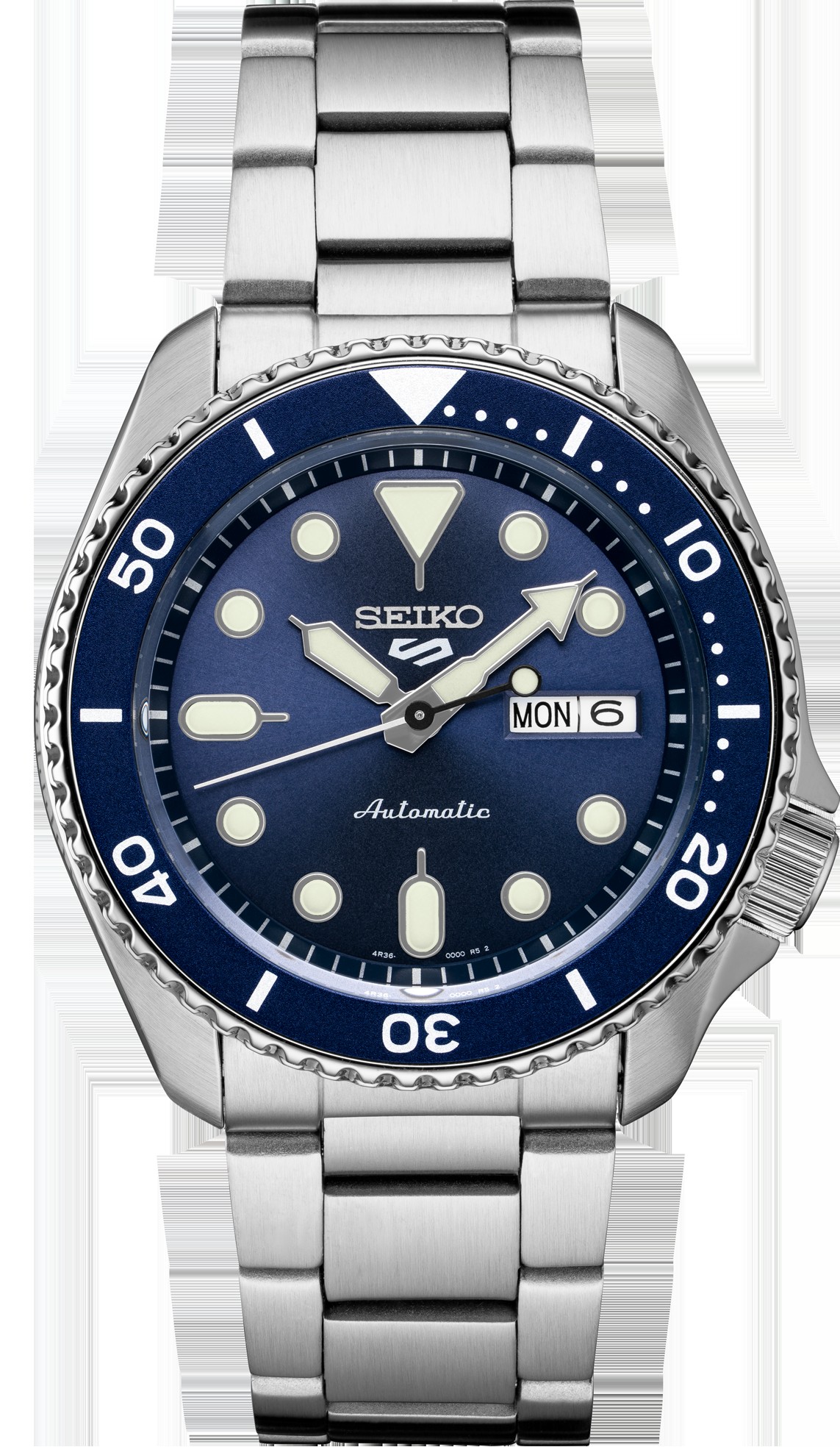
The single most compelling argument for Seiko is what you get for the money. The Seiko 5 Sports SRPD51 retails for around $295 as of September 2026 and includes an automatic in-house calibre, solid steel case, 100-metre water resistance, and a display caseback — features you would expect to pay three to four times more for from a Swiss brand. The Seiko Presage SRPB41 (Cocktail Time) adds a stunning cocktail-inspired sunburst dial for around $475, while the Prospex Sumo SPB101 reaches true professional dive-watch territory — 200-metre water resistance, sapphire crystal, LumiBrite lume, 70-hour power reserve — for around $650.
Seiko’s depth of catalogue is also unmatched. Want a field watch? The Prospex Alpinist. A pilot watch? The Astron GPS Solar. A dress watch with visible power reserve? The Presage Sharp Edged. A high-end mechanical with Spring Drive precision? Grand Seiko. Seiko spans from $200 entry-level to $50,000 Grand Seiko Masterpieces, all built around the same philosophy of in-house manufacture. For a deeper look, see our Seiko Prospex vs Presage comparison.

The Case for Omega: Precision, Prestige, and Performance
Omega’s case rests on three pillars: movement precision, brand prestige, and an unrivalled heritage story. Since 2015, Omega has equipped most of its automatics with Master Chronometer-certified movements — calibres independently tested by METAS (the Swiss federal metrology institute) to maintain accuracy within 0/+5 seconds per day even in magnetic fields up to 15,000 gauss. For reference, standard COSC certification allows plus or minus 4 seconds per day with no magnetic-field stipulation. The Omega Seamaster 300m (ref. 210.30.42.20.03.001) runs the Co-Axial Master Chronometer Cal.8800, rated for 300 metres of water resistance, in a 42mm steel case, retailing for around $5,400 as of September 2026.
The prestige argument is real and measurable. Omega appears on Hollywood sets, Olympic podiums, and in every Bond film since GoldenEye (1995). The Seamaster is one of the world’s most recognised watches. The Omega Speedmaster is NASA-certified and historically significant in ways no other watch can claim. For pure dress watch versatility, the Omega De Ville offers refined Swiss elegance, while the Seamaster Planet Ocean Ultra Deep holds the record for the deepest ocean dive ever performed wearing a watch.

Head-to-Head Specs Comparison
Below is a direct comparison of the most popular entry-to-mid models from each brand, using verified specifications as of September 2026.
| Model | Price (Sep 2026) | Case | Movement | Power Reserve | Water Resistance | Crystal |
|---|---|---|---|---|---|---|
| Seiko 5 Sports SRPD51 | ~$295 | 42.5mm steel | Cal.4R36 (auto) | 41h | 100m | Hardlex |
| Seiko Presage SRPB41 | ~$475 | 40.5mm steel | Cal.4R57 (auto, PR ind.) | 41h | 100m | Hardlex |
| Seiko Prospex Sumo SPB101 | ~$650 | 45mm steel | Cal.6R35 (auto) | 70h | 200m | Sapphire |
| Omega Seamaster 300m | ~$5,400 | 42mm steel | Cal.8800 (METAS) | 55h | 300m | Sapphire |
| Omega Aqua Terra 150m | ~$5,700 | 41mm steel | Cal.8900 (METAS) | 60h | 150m | Sapphire |
| Omega Speedmaster Pro | ~$7,100 | 42mm steel | Cal.3861 (METAS, manual) | 60h | 50m | Sapphire/Hesalite |
Competitor Comparison Table
How do Seiko and Omega stack up against other brands at comparable price points?
| Brand | Entry Price | Mid-Range | Movement | Certification | Brand Tier |
|---|---|---|---|---|---|
| Seiko (Prospex) | ~$295 | ~$650 | In-house auto | None (Seiko QC) | Accessible |
| Omega | ~$5,400 | ~$7,100 | In-house Co-Axial | METAS Master Chronometer | Luxury |
| Tudor | ~$3,350 | ~$4,800 | In-house (MT5601) | COSC | Near-luxury |
| Longines | ~$1,200 | ~$2,800 | ETA/Sellita | COSC (select) | Mid-range Swiss |
| Grand Seiko | ~$4,100 | ~$6,900 | In-house (Spring Drive/Hi-Beat) | Seiko Meisters (+/-1s/day) | Luxury |
Price, Value, and the Real Question
The price gap between Seiko and Omega is roughly 10x at the entry level ($295 vs $5,400). That is not a gap you can dismiss by invoking “Swiss precision” or “brand heritage” alone. At $650, the Seiko Prospex Sumo SPB101 offers a sapphire crystal, a 70-hour power reserve, and 200-metre dive-rated water resistance — a genuinely professional specification that would cost $2,000 to $3,000 from any Swiss mid-range brand. The Seiko Save the Ocean limited editions add environmental mission storytelling to the value equation.
That said, Omega’s METAS certification is not marketing. A Master Chronometer movement is independently tested to withstand 15,000 gauss of magnetic interference — a real-world concern for anyone who works near MRI machines or industrial motors. Omega movements are tested for water resistance, shock resistance, and chronometric precision across six positions. Seiko’s calibres are quality-controlled in-house but not independently certified. The finishing visible through a Seiko 5 Sports display back is functional, not decorative; Omega’s finishing is show-worthy under magnification.
Value also depends on resale. Omega retains around 60 to 75 percent of retail after five years on the secondary market (Chrono24 data, 2025 to 2026). Seiko entry models depreciate more steeply, though Prospex and limited-edition pieces hold up better. If you treat a watch as a long-term asset, Omega wins decisively. If you are buying for daily enjoyment without worrying about exit value, Seiko’s proposition is extraordinary.
Where to buy:
- Seiko 5 Sports SRPD51 (Blue) — ~$295 — the definitive entry-level automatic value pick
- Seiko Prospex Sumo SPB101 — ~$650 — professional-spec dive watch with 70h power reserve
- Quick-Release Leather Watch Strap (18-22mm) — ~$18-$25 — dress up your Seiko Presage or Prospex instantly
Which Should You Buy?
Buy Seiko if: you want an exceptional daily wearer under $700, you are new to mechanical watches, you appreciate Japanese manufacturing heritage, or you want variety across your collection. The Seiko Presage Cocktail Time remains one of the most beautiful watches under $500.
Buy Omega if: you are ready to invest in a single watch that will last decades, you value independent movement certification, you want brand cachet in boardroom and beach alike, or you love the Seamaster’s cultural presence and the Speedmaster’s lunar history. Compared with the Seiko vs Rolex debate — where waiting lists and stratospheric prices dominate — Omega sits at a genuinely reachable luxury level. And compared to the Seiko vs Tissot matchup, Omega offers a clear step up in movement technology and brand legacy.
If budget is the deciding factor, there is no shame in choosing Seiko: you would be joining millions of enthusiasts worldwide who own exceptional mechanical timepieces for under $1,000. If you are ready to invest, Omega will rarely disappoint — and you can read more about how Seiko compares with other Swiss rivals in our Seiko vs Longines and Seiko vs Citizen guides.
Frequently Asked Questions
In terms of reliability, Seiko produces excellent in-house calibres — especially the 6R35 (70h power reserve) and 4R36. However, Omega’s Master Chronometer movements are independently certified by METAS to higher accuracy tolerances (0/+5 seconds per day) and magnetic resistance standards. At comparable price points (Grand Seiko vs Omega), the gap narrows significantly, and Grand Seiko Spring Drive movements achieve plus or minus 1 second per day — arguably superior to Omega’s tolerance. At entry level, Seiko overdelivers dramatically for the money.
Omega charges a premium for several compounding factors: Swiss Made branding, METAS movement certification, high-end movement finishing, sapphire crystals standard across the range, significant marketing costs (Olympics, James Bond, NASA legacy), and the brand’s position within the Swatch Group’s luxury tier. Seiko keeps costs lower through vertical integration — making everything from steel alloys to crystals in-house — and by targeting volume across accessible price bands.
Omega holds value significantly better. Seamaster and Speedmaster references typically retain 60 to 75 percent of retail on the secondary market after five years (Chrono24, 2025 to 2026). Seiko entry models depreciate more sharply, though limited-edition Prospex pieces and some discontinued references can appreciate. If resale value matters, Omega — or Grand Seiko — is the stronger investment.
The Seiko Prospex Sumo SPB101 ($650, 200m WR, sapphire, 70h power reserve) competes favourably with dive watches costing two to three times as much — but it does not directly match the Omega Seamaster 300m ($5,400, 300m WR, METAS-certified, helium escape valve). They serve different buyers. Seiko wins on value per feature; Omega wins on depth rating, movement certification, and brand prestige. Both are serious dive tools.
Grand Seiko is the closest equivalent to Omega in terms of movement precision, finishing quality, and price. Grand Seiko Spring Drive movements achieve plus or minus 1 second per day accuracy, which surpasses Omega’s Master Chronometer tolerance (0/+5 seconds). The SBGA211 Snowflake ($6,900) compares directly with the Omega Seamaster Aqua Terra ($5,700). For mainstream Seiko, the Prospex LX SNR033 ($1,500 to $2,000) is the most premium non-Grand Seiko offering.
If this is your first meaningful watch purchase, start with Seiko — a Presage or Prospex will teach you what you like without a steep financial commitment. If you have already owned entry-level watches and want to step into true Swiss luxury with a single purchase, Omega Seamaster 300m is a classic, safe choice with near-universal resale appeal. Both brands reward their owners generously.
In specific technical metrics, yes. Grand Seiko Spring Drive movements achieve plus or minus 1 second per day — more precise than Omega Master Chronometer’s 0/+5s specification. Grand Seiko dial finishing (Shizukuishi and Shinshu ateliers) is widely regarded among enthusiasts as rivalling or surpassing Omega’s dial artistry in texture and depth. In the $5,000 to $8,000 price bracket, Grand Seiko and Omega are genuine equals, with buyers choosing based on aesthetics and cultural preference rather than objective quality gaps.
Recent Articles
- Grand Seiko vs Zenith (2026): Spring Drive Artistry vs El Primero Legacy
- Rolex Explorer II Buying Guide 2026: All References, Specs & Which to Buy
- Grand Seiko vs Breitling (2026): Japanese Artisan Craft or Swiss Aviation Icon?
- Tudor 1926 Buying Guide (2026): Every Reference, Movement & Which to Choose
- Omega De Ville Buying Guide 2026: Every Collection, Movements & Best Picks
This article was researched with the help of AI. While we strive to keep all information accurate and up to date, there may be errors. If you notice any discrepancies, please contact us.
Leave a Reply
You must be logged in to post a comment.