
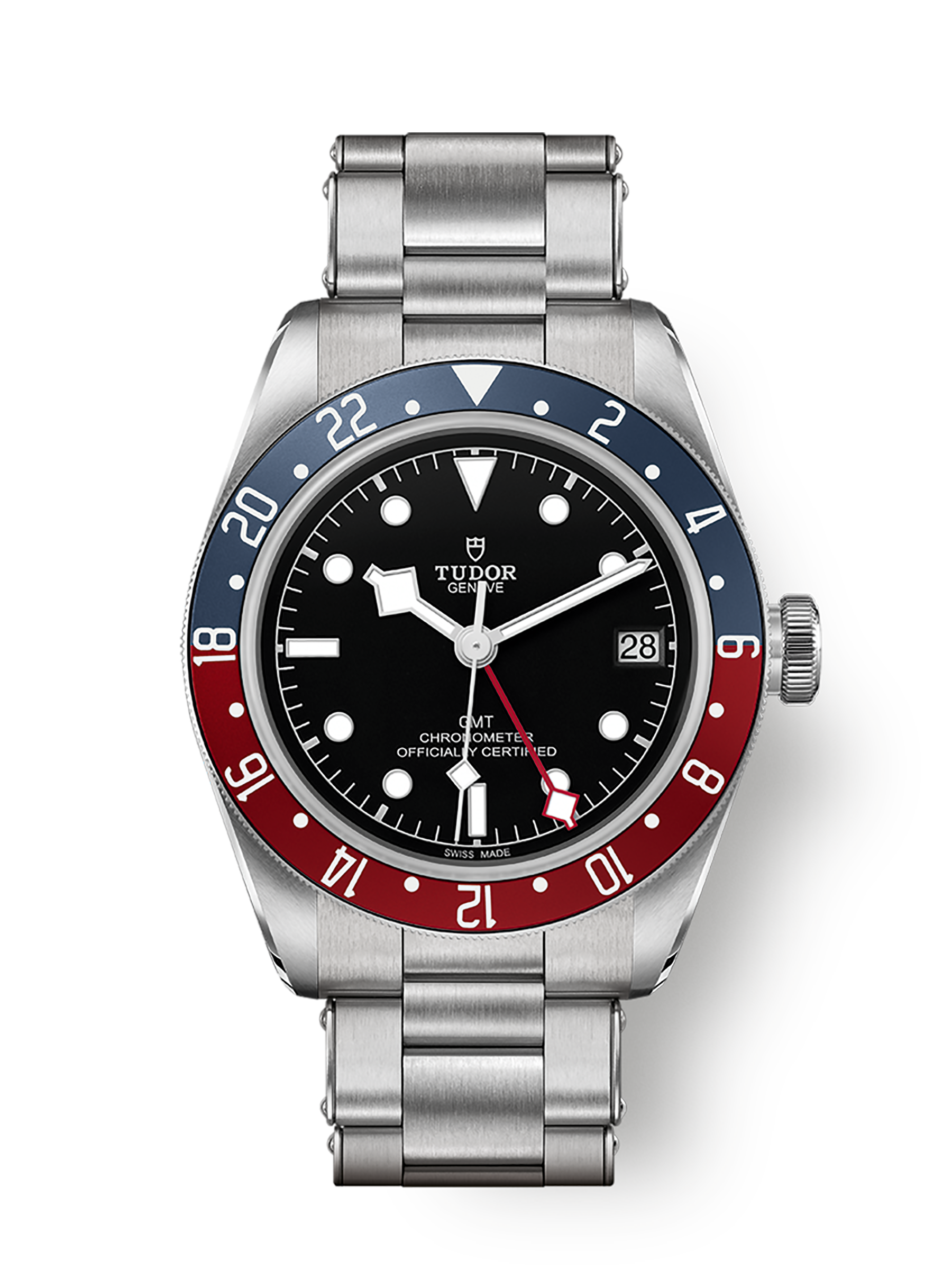
TL;DR — Tudor vs Omega
- Buy Tudor if: you want Rolex-group build quality, in-house movements, and genuine tool-watch heritage for $2,000–$5,000 less than Omega’s comparable models.
- Buy Omega if: brand prestige matters, you want METAS Master Chronometer certification, or you need a Speedmaster or Constellation with no equivalent in Tudor’s lineup.
- Value edge: Tudor. The Black Bay GMT at ~$4,275 competes with Omega’s Seamaster 300M at ~$5,600 — same movement quality tier, significant price gap.
- Prestige edge: Omega. It carries broader recognition, appears on the wrist of astronauts, and holds secondary market value more predictably.
- The honest answer: For most buyers prioritising watch quality per dollar, Tudor wins. For buyers where brand name matters at the dinner table, Omega wins.
If you have a budget between $3,000 and $6,000 and you want a serious Swiss mechanical watch, Tudor vs Omega is one of the most common and genuinely difficult decisions in horology. Both brands produce in-house movements. Both have rich heritage. Both make iconic dive watches. And both offer a level of finish that justifies their prices. But they are fundamentally different in who they appeal to and what they deliver for the money.
This guide cuts through the marketing and gives you a direct comparison of movement quality, brand heritage, iconic models, and real-world value — so you can decide which brand belongs on your wrist in 2026.
[toc]
Brand Heritage: A Tale of Two Legacies
Tudor was founded by Hans Wilsdorf in 1926, the same man who created Rolex. It was designed from the start as Rolex’s value-focused sibling — sharing the same Geneva-based ownership (the Wilsdorf Foundation) and later the same steel alloy — while keeping prices accessible. For decades Tudor used outsourced movements (ETA, Sellita), but since 2015 it has produced its own in-house calibres, becoming a legitimate manufacture in its own right.
Omega’s heritage runs even deeper: founded in 1848 as Louis Brandt et Fils in La Chaux-de-Fonds, it introduced the “Omega” name in 1894 to describe what it called the “last word in watchmaking.” Omega supplied pocket watches to British troops in World War I, became NASA’s choice for manned space missions in 1965 (the Speedmaster), and has served as the official timekeeper of the Olympic Games for over a century. Today it is owned by the Swatch Group, the world’s largest watch conglomerate.
Both brands have genuine stories. Tudor’s is a quieter one — it thrives on word-of-mouth respect among collectors rather than mainstream name recognition. Omega’s is louder, built on decades of advertising, celebrity endorsements, and one of the most famous watches ever worn on the Moon.
Movement Quality: In-House vs Master Chronometer
This is where the comparison gets technical and important. Tudor’s current in-house movements — the MT5402, MT5602, MT5612, MT5652, and MT5813 — are COSC-certified, with accuracy specifications of ±4 seconds per day. They feature silicon balance springs (anti-magnetic, no lubrication required) and power reserves of 70 hours across the core lineup. The build quality and reliability record is excellent — Tudor in-house movements are serviced at every authorised Tudor dealer worldwide.
Omega’s modern movements go further. Their Co-Axial calibres use a proprietary escapement that reduces friction and extends service intervals. The top-tier models carry METAS Master Chronometer certification — a standard developed with the Swiss Federal Institute of Metrology that tests accuracy (0 to +5 seconds per day), anti-magnetic resistance (up to 15,000 gauss), and power reserve under real-world conditions. No Tudor movement currently carries METAS certification, though the practical difference in daily performance for most wearers is minimal.
Verdict: Omega holds a genuine technical edge on paper. In practice, both movements will keep accurate time, resist everyday magnetic fields, and serve you for decades with proper servicing. The Tudor is simpler; the Omega is more sophisticated.
Key Models Side by Side
| Category | Tudor Pick | Tudor Price | Omega Pick | Omega Price |
|---|---|---|---|---|
| Sport diver | Black Bay 58 | ~$3,900 | Seamaster 300M 42mm | ~$5,600 |
| Professional diver | Pelagos 39 | ~$5,625 | Seamaster 300M / Planet Ocean | ~$5,600–$8,200 |
| GMT traveller | Black Bay GMT | ~$4,275 | Aqua Terra GMT | ~$7,200+ |
| Chronograph | Black Bay Chrono | ~$6,150 | Speedmaster Professional | ~$6,900 |
| Dress/sport | Tudor Royal | ~$3,350 | Aqua Terra 150M | ~$6,400 |
The pricing story is stark. In nearly every head-to-head category, Tudor delivers comparable — sometimes superior — mechanical credentials at $1,500 to $3,000 less. The exception is the chronograph category: at ~$6,150, the Black Bay Chrono is within $750 of the Speedmaster Professional, and there the Omega’s moonwatch heritage and iconic status make it a tougher call.
Tudor’s Strongest Models in 2026
Tudor’s lineup centres on the Black Bay family — Heritage-inspired sport watches with in-house movements, 200m water resistance, and the distinctive domed dial and snowflake hands. The Black Bay 58 (39mm) is particularly beloved for its wearability; the Pelagos line handles serious diving with a titanium case and proprietary bracelet; and the Black Bay GMT delivers a certified GMT complication for less than any comparable Omega GMT option.
Tudor also offers the Royal (integrated bracelet dress-sport) and the relaunched Ranger (39mm field watch at ~$2,400) for buyers who want something outside the dive watch category. The 2026 Black Bay 58 GMT adds a more compact GMT option to the already comprehensive lineup.
Omega’s Strongest Models in 2026

Omega’s portfolio is broader and more prestigious. The Seamaster 300M is their dive watch benchmark — available in 42mm with Master Chronometer certification, in steel from ~$5,600. The Aqua Terra 150M is the sporty dress watch option, with that distinctive “teak” dial and anti-magnetic Master Chronometer movement. The Speedmaster Professional (Moonwatch) stands alone as a cultural artifact: hand-wound, Hesalite or sapphire crystal, and the exact calibre that went to the Moon in 1969. The Constellation and De Ville lines extend Omega into pure dress territory with no equivalent in Tudor’s lineup.
Which Brand Offers Better Value?
| Factor | Tudor | Omega | Winner |
|---|---|---|---|
| Price per movement quality | COSC ±4s/day, 70h PR | METAS 0/+5s/day, 60h PR | Tudor (better value) |
| Brand recognition | Collector favourite, niche | Widely known globally | Omega |
| Secondary market value | Holds ~80–90% of retail | Holds ~75–95% depending on model | Draw |
| Heritage depth | 1926, Rolex-group DNA | 1848, NASA, Olympics | Omega |
| Practicality per dollar | More watch for less money | Premium for the name | Tudor |
| Service network | Rolex ADs worldwide | Omega boutiques and ADs | Draw |
For watch enthusiasts who care about movement engineering, wearability, and heritage, Tudor wins on value. For buyers where the brand carries social weight — business gifts, anniversary watches, conversation pieces at non-watch events — Omega’s recognition is worth the premium. Neither is a wrong answer. They target slightly different buyers within the same budget range. For more on how Tudor fits in the broader luxury watch landscape, see our Grand Seiko vs Tudor comparison.
If you are equipping yourself for travel and want a versatile NATO strap to swap between your Tudor and a rubber-strap option, the 21mm (Tudor) and 20mm (Omega) widths are among the most plentiful in the aftermarket. A travel watch roll with multiple slots protects both watches on international trips. If you own both brands and rotate them, a two-slot watch winder keeps both calibres wound and ready.
Frequently Asked Questions
Tudor is not owned by Rolex directly — both brands are owned by the Wilsdorf Foundation, the private family trust established by Rolex founder Hans Wilsdorf. Tudor and Rolex operate independently but share the same Geneva-based parent organisation, the same steel alloy (Oystersteel), and some manufacturing infrastructure. Tudor is not a Rolex sub-brand; it is a distinct company with its own design team, movements, and distribution network.
Both brands hold value well compared to most Swiss watches. Omega’s Speedmaster Professional (Moonwatch) and Seamaster 300M are among the most stable-value watches in their class. Tudor’s Black Bay 58 and Pelagos models typically retain 80–90% of retail on the secondary market. Neither brand’s standard models appreciate like rare Rolex references, but both depreciate less than branded fashion watches. Specific limited editions from both brands can command premiums.
Tudor is significantly easier to buy at retail. Unlike Rolex, Tudor watches are available immediately at authorised dealers with no waitlists required for standard steel models. Omega’s most popular models — particularly the Speedmaster Professional in non-allocated years and the Seamaster 300M — are also readily available at retail, making both brands more accessible than Rolex at current market conditions.
Both are excellent. Tudor’s Pelagos line (500m water resistance, titanium case, in-house MT5602 movement) is a professional diver’s watch that meets ISO 6425 dive watch standards. Omega’s Seamaster Planet Ocean 600M is similarly ISO 6425 compliant with a 600m depth rating. For recreational diving (under 40m), either brand’s standard Seamaster or Black Bay will suffice. For serious technical diving, the Pelagos or Planet Ocean are the respective flagships. See our Tudor Pelagos vs Omega Planet Ocean comparison for a full breakdown.
The Tudor Black Bay GMT (~$4,275) has an in-house MT5652 movement, COSC certification, 70-hour power reserve, and 200m water resistance. The Omega Aqua Terra 150M GMT (~$7,200+) has METAS Master Chronometer certification and more dress-appropriate proportions. The Tudor offers roughly the same level of mechanical engineering for $3,000 less. Unless the Omega’s brand name or METAS certification is a priority, the Tudor is the stronger value buy.
Yes, Tudor is classified as a luxury watch brand. With prices starting at ~$1,700 for the Ranger and reaching $6,900+ for the Black Bay Chrono or Pelagos Ultra, and with in-house movements, sapphire crystals, and Oystersteel cases, Tudor firmly occupies the entry-to-mid luxury segment. It is priced below Omega’s core range but carries comparable manufacturing standards. Among watch collectors, Tudor carries significant respect as a brand that prioritises substance over marketing.
For a first luxury watch, Tudor is often the smarter choice. The Black Bay 58 (~$3,900) or Ranger (~$2,400) provide excellent entry points with in-house movements, Rolex-group build quality, and strong community support. Omega is the better choice if you want a specific iconic model — the Speedmaster Moonwatch or Seamaster 300M — that carries cultural significance beyond the watch world. Both brands will serve you for life with proper care.
More From The Watchology
- Grand Seiko vs Tudor (2026): Which Brand Should You Buy?
- Tudor Pelagos Buying Guide (2026): Every Reference Explained
- Rolex GMT-Master II vs Tudor Black Bay GMT (2026)
- Tudor Pelagos vs Omega Planet Ocean (2026)
- Tudor Black Bay Chrono Review (2026)
- Rolex Sea-Dweller vs Tudor Pelagos (2026)
- Rolex Daytona vs Tudor Black Bay Chrono (2026)
Recent Articles
- Omega Aqua Terra Buying Guide (2026): Every Reference, Movement & Price Explained
- Grand Seiko vs IWC (2026): Japanese Precision or Swiss Engineering?
- Grand Seiko vs Jaeger-LeCoultre (2026): Which Should You Buy?
- Seiko vs Hamilton (2026): Which Brand Offers Better Value?
- Tudor Black Bay 58 vs Pelagos 39 (2026)
This article was researched with the help of AI. While we strive to keep all information accurate and up to date, there may be errors. If you notice any discrepancies, please contact us.
Leave a Reply
You must be logged in to post a comment.