
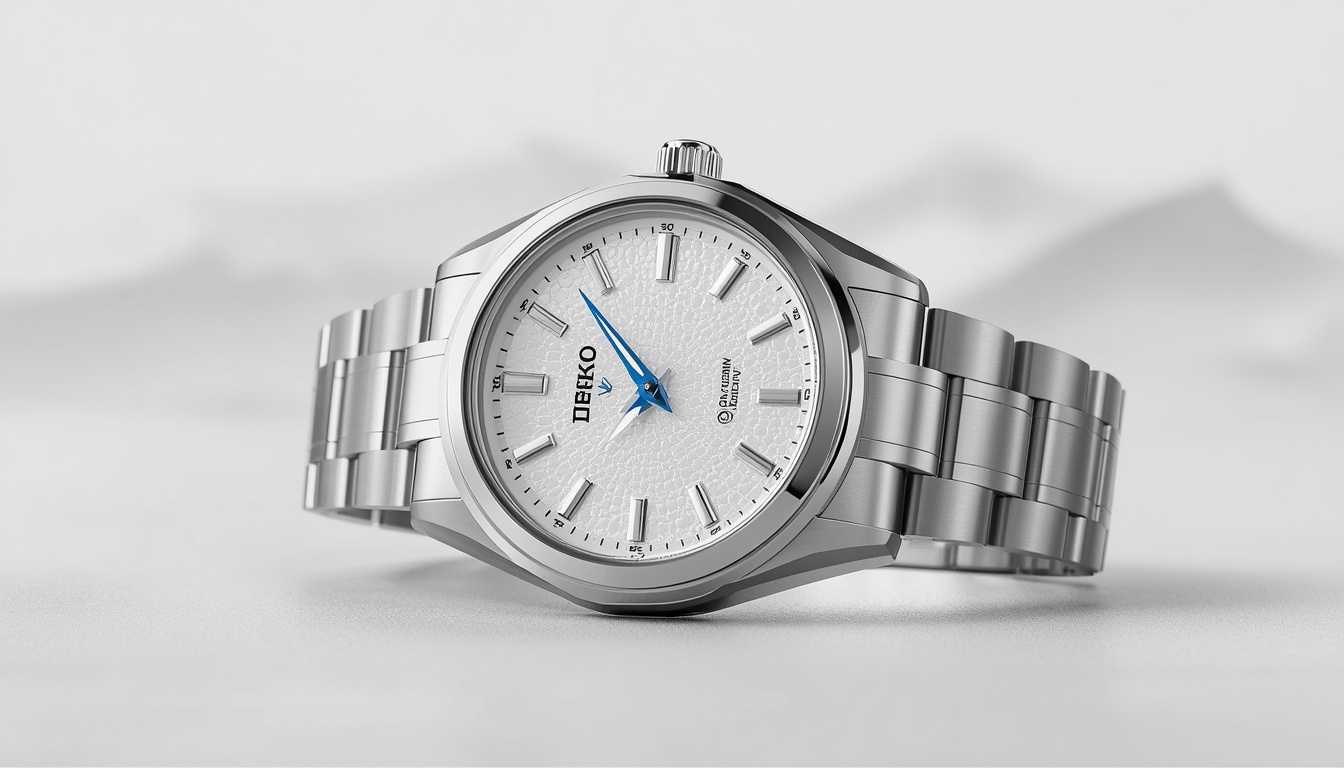
TL;DR: Grand Seiko and IWC occupy the same $6,500–$9,500 sweet spot in luxury watchmaking, yet come from completely different traditions. Grand Seiko offers unmatched dial artistry and the unique Spring Drive movement (±1 sec/day) in lightweight titanium cases from $6,900. IWC brings Swiss Bauhaus precision, in-house calibers with 60h power reserve, and 30–300m water resistance from ~$6,200. If you prize texture, Japanese artisan craft, and a technically fascinating movement, choose Grand Seiko. If you want legible tool-watch versatility with Swiss prestige and broader water resistance, choose IWC.
Table of Contents
- Brand Philosophy: Wabi-Sabi vs Bauhaus Precision
- Head-to-Head Specs: SBGA211 vs IWC Portugieser Auto 40
- Movement Technology: Spring Drive vs Cal.82100
- Design & Dial Craft
- Water Resistance & Daily Wear
- Value & Ownership Costs
- Competitor Comparison
- Who Should Buy Grand Seiko?
- Who Should Buy IWC?
- Verdict
- FAQ
At the $6,500–$9,500 price tier, two names define the quality ceiling of what in-house watchmaking can deliver outside the Swiss mainstream: Grand Seiko from Japan’s Shizukuishi Watch Studio, and IWC Schaffhausen from the Swiss town that has manufactured pilot and sport watches since 1868. Both brands command loyalty from serious collectors. Both invest heavily in proprietary movement development. Yet the experience of wearing one versus the other could scarcely be more different. This guide cuts through the marketing to compare them directly — specs, movements, design philosophy, and long-term ownership — so you can decide which belongs on your wrist.
Brand Philosophy: Wabi-Sabi vs Bauhaus Precision
Grand Seiko’s entire identity is built around a Japanese aesthetic concept called wabi-sabi — the beauty found in impermanence, texture, and natural imperfection. Every Grand Seiko dial is a landscape: the Snowflake SBGA211 replicates the textured snowdrift surface of Japan’s Shinshu mountains; the Midnight Blue SBGA439 captures a winter night sky; the Birch GMT SBGM221 maps the bark of a Japanese white birch tree. These dials are hand-finished in Shizukuishi by artisans who have spent decades perfecting a single craft. The Zaratsu-polishing technique — applied by hand to every Grand Seiko case — produces mirror-flat surfaces without distortion, a finishing standard that Swiss brands at double the price rarely match.
IWC takes the opposite approach. Rooted in the Schaffhausen tradition of engineering-led watchmaking, IWC designs for legibility, robustness, and technical honesty. The Portugieser’s clean opaline dial, railroad minute track, and applied indices are a masterclass in Bauhaus restraint. There is no decorative surface texture here — the beauty lies in the purity of line and the confidence of a movement that has been refined over decades. IWC’s Big Pilot, Pilot’s Watch, and Aquatimer lines push the same philosophy further into tool-watch territory. The brand has been fully in-house with its core calibers since around 2014, and its current-generation movements — particularly the Cal.82000 family — are among the most reliable in Swiss watchmaking at this tier.
Head-to-Head Specs: SBGA211 Snowflake vs IWC Portugieser Auto 40
| Specification | Grand Seiko SBGA211 Snowflake | IWC Portugieser Auto 40 (IW358305) |
|---|---|---|
| Case diameter | 41mm | 40.4mm |
| Case material | Titanium (Grade 5) | Stainless steel |
| Movement | Cal.9R65 Spring Drive | Cal.82100 automatic |
| Power reserve | 72 hours | 60 hours |
| Accuracy | ±1 sec/day (Spring Drive) | ±2–4 sec/day (COSC not standard) |
| Frequency | Tri-synchro resonator (hybrid) | 28,800 vph |
| Water resistance | 100m | 30m |
| Crystal | Sapphire (AR coated) | Sapphire (AR coated) |
| Strap/bracelet | Titanium bracelet or leather | Leather / alligator |
| Weight | ~90g (titanium) | ~120g (steel) |
| Lug width | 20mm | 20mm |
| Price (as of Aug 2026) | $6,900 | ~$8,700 |

Movement Technology: Spring Drive vs Cal.82100
The Grand Seiko Spring Drive is unlike any other watch movement on Earth. It combines a traditional mainspring with a quartz oscillator — the mainspring winds, the escapement releases energy through a tri-synchro resonator, and a quartz element acts as a governor to correct any frequency deviation. The result is ±1 second per day accuracy without a battery, a gliding (non-ticking) seconds hand, and a power reserve of 72 hours in the Cal.9R65. Grand Seiko produces roughly 95% of the Spring Drive’s components in-house at the Shizukuishi studio. It is a genuine manufacturing achievement that no Swiss brand has replicated.
The IWC Cal.82100 is a properly in-house Swiss automatic: 50 jewels, 28,800 vph beat rate, 60h power reserve, and a date function via a quick-set crown mechanism. IWC developed the 82000 caliber family around 2014 to replace its previous Pellaton-based movements and has since refined it across Portugieser, Portofino, and Da Vinci lines. Accuracy typically runs +2 to +4 sec/day in real-world use — excellent for a mechanical automatic, but a step below the Spring Drive’s benchmark. The movement is robust, serviceability is straightforward, and IWC service intervals are typically 5–7 years. Neither movement is a weak choice; it comes down to whether you want hybrid precision or conventional Swiss engineering.
Design & Dial Craft
The Grand Seiko SBGA211 Snowflake is one of the most recognisable watch dials in the world. Its white-textured surface is created using a special Mica powder coating process developed in Shizukuishi, and no two dials are identical — each captures the grain of Shinshu’s winter snowdrifts slightly differently. The titanium case is Zaratsu-polished by hand: flat facets catch light like a cut gemstone, while brushed sections absorb it. The case is 41mm but reads slimmer on the wrist due to titanium’s low density (~90g total weight). The blue-speckled hour markers are applied indexes, sized deliberately to avoid cluttering the dial. Viewed in changing light, the Snowflake is a living object.
The IWC Portugieser Auto 40 is serene in a completely different way. Its argenté opaline dial — available in blue (IW358305) or silver — uses a railroad minute track around the perimeter and slim applied Arabic numerals in a typeface unchanged since the original 1930s Portugieser. There is no date disrupting the symmetry, no sub-dial breaking the calm: just time, a small running seconds at 9 o’clock, and enormous legibility. The steel case has a polished bezel and brushed lug flanks. It is one of the most classically proportioned dress-sport watches in Swiss production, and at 40.4mm it wears slim despite steel’s greater weight relative to titanium.
Water Resistance & Daily Wear
The Grand Seiko SBGA211 offers 100m water resistance — enough for swimming, snorkelling, and daily wear without anxiety. The titanium case is hypoallergenic and exceptionally lightweight, making it comfortable for 12+ hour wear. IWC’s Portugieser Automatic 40 is rated to only 30m (3 ATM), which is splash and hand-wash safe but not swimming-rated. If you need a Grand Seiko-tier watch with serious water resistance, look at the Grand Seiko Sport Collection (SBGE253/295 at 100–200m) or IWC’s Aquatimer line (300m). For office-to-dinner wear, both the SBGA211 and Portugieser are ideal choices.
Value & Ownership Costs
At retail, Grand Seiko’s SBGA211 ($6,900) is $1,800 less than the IWC Portugieser Auto 40 (~$8,700), yet delivers superior dial craft, a more exotic movement, and a lighter case. Grand Seiko’s authorised dealer network has expanded significantly in North America and Europe since 2022, and resale on the secondary market has held firm at roughly 70–80% of retail for core references like the Snowflake — driven by limited supply relative to demand. IWC’s resale market is more liquid (wider availability means heavier discounting), typically 60–75% of retail for Portugieser steel references. Grand Seiko service intervals are approximately 3–5 years (Spring Drive mechanism has more components), while IWC recommends 5–7 years. Both brands have authorised service centres globally; neither is difficult to service.
Competitor Comparison: Grand Seiko, IWC & Tier Rivals
| Watch | Price (Aug 2026) | Case | Movement | Power Reserve | WR |
|---|---|---|---|---|---|
| Grand Seiko SBGA211 Snowflake | $6,900 | 41mm titanium | Spring Drive Cal.9R65 | 72h | 100m |
| IWC Portugieser Auto 40 IW358305 | ~$8,700 | 40.4mm steel | Cal.82100 auto | 60h | 30m |
| Omega Aqua Terra 150M 38mm | ~$6,400 | 38mm steel | Cal.8800 METAS | 55h | 150m |
| Rolex Datejust 41 126300 | ~$9,100 | 41mm Oystersteel | Cal.3235 auto | 70h | 100m |
| Jaeger-LeCoultre Master Control Date 40 | ~$8,000 | 40mm steel | Cal.899/1 auto | 38h | 50m |
Who Should Buy Grand Seiko?
Buy the Grand Seiko SBGA211 Snowflake — or any piece from the Elegance Collection — if you want a watch that functions as wearable art. You appreciate dials that change character with the light, craftsmanship that rivals haute horologerie at half the price, and a movement that is genuinely unlike anything else. Grand Seiko suits buyers who have done their research, are comfortable owning something that not every dinner guest will recognise, and value material quality over brand legacy. It is the insider’s choice — and increasingly recognised as such by serious collectors globally.
Who Should Buy IWC?
Buy the IWC Portugieser Automatic 40 if you want clean, timeless elegance with a pedigree that travels well in any context — boardroom, black tie, weekend. IWC’s design language is immediately legible to anyone familiar with Swiss watchmaking, and the Portugieser’s proportion and dial layout are as close to perfect dress-sport geometry as Swiss manufacturing produces at this price. IWC also suits buyers who want flexibility across collections: from the tool-watch Aquatimer to the aviation-inspired Pilot series, IWC’s range is broader than Grand Seiko’s. If brand familiarity and Swiss prestige matter to your purchasing decision, IWC is the natural choice.
Verdict
On pure watchmaking value, Grand Seiko edges ahead: superior dial artistry, lighter titanium case, more accurate movement, longer power reserve, and better water resistance — all at $1,800 less than the Portugieser. But IWC wins on brand accessibility, design versatility, and the weight of Swiss horological tradition. The honest answer is that both are exceptional, and the right choice depends almost entirely on which philosophy resonates with you. Read more about how Grand Seiko compares to other Swiss rivals in our guides to Grand Seiko vs JLC, Grand Seiko vs Omega, and the complete Grand Seiko Buying Guide.
Frequently Asked Questions
It depends on what you value. Grand Seiko offers superior dial artistry, a more accurate Spring Drive movement (±1 sec/day vs ±2–4 sec/day), greater water resistance (100m vs 30m on the Portugieser), and a lighter titanium case — often at a lower retail price. IWC counters with Swiss heritage, broader collection range, and more universally recognised brand prestige. For pure watchmaking value, Grand Seiko has the edge; for brand recognition and Swiss tradition, IWC wins.
The Grand Seiko Spring Drive (Cal.9R65) is rated ±1 second per day — significantly more accurate than a conventional mechanical automatic. IWC’s Cal.82100 typically runs +2 to +4 seconds per day in real-world use, which is excellent for an automatic but a step below Spring Drive precision. If movement accuracy is a priority, Grand Seiko’s Spring Drive is the clear choice at this price tier.
Grand Seiko’s core references (Snowflake SBGA211, White Birch SLGH005) have shown stronger secondary market retention in recent years, typically holding 70–80% of retail value. IWC Portugieser steel references generally hold 60–75% due to wider availability and heavier authorised dealer discounting. Limited edition Grand Seiko pieces (Tentagraph, Spring Drive limited dials) have appreciated significantly above retail on the secondary market.
The Grand Seiko SBGA211 Snowflake is rated 100m water resistant — suitable for swimming, snorkelling, and showering. The IWC Portugieser Automatic 40 is rated only 30m (3 ATM), making it splash and hand-wash safe but not swimming-rated. For a water-resistant IWC, the Aquatimer series (300m) is the appropriate choice. Grand Seiko’s Sport Collection models reach 200m.
The IWC Portugieser Automatic 40 (IW358305, ~$8,700) is the closest IWC equivalent to Grand Seiko’s SBGA211 Snowflake ($6,900) — both are 40–41mm dress-sport watches with in-house movements. For a lower entry point, the IWC Portofino Automatic 40 (~$6,200) with Cal.35100 competes with Grand Seiko’s Elegance Collection (SBGM221 GMT at $5,400). Neither IWC reference matches Grand Seiko’s dial craft, but both offer excellent Swiss movement reliability.
For case and dial finishing, most collectors agree that Grand Seiko surpasses IWC at comparable price points. Grand Seiko’s Zaratsu hand-polishing technique produces case surfaces that rival watches costing two to three times more, and its hand-textured dials (Snowflake, Midnight Blue, Birch GMT) are genuinely unique in the industry. IWC’s finishing is clean and consistent but more utilitarian — the priority is form-follows-function rather than artisanal surface craft.
Brand recognition for Grand Seiko varies by market. In Japan, it is universally recognised and carries enormous prestige. In North America and Europe, awareness among non-collectors is lower than Rolex or IWC, though it has grown significantly since 2020. Among watch enthusiasts globally, Grand Seiko is highly regarded — often called the connoisseur’s choice. If wearing a recognisable brand to non-watch-people matters, IWC has broader mainstream visibility. If you enjoy explaining your watch, Grand Seiko gives you far more to talk about.
Recent Articles
- Grand Seiko vs Jaeger-LeCoultre (2026)
- Grand Seiko GMT Buying Guide (2026)
- Grand Seiko vs Tudor (2026)
- Grand Seiko vs Panerai (2026)
- Grand Seiko Elegance Collection Buying Guide (2026)
This article was researched with the help of AI. While we strive to keep all information accurate and up to date, there may be errors. If you notice any discrepancies, please contact us.
Leave a Reply
You must be logged in to post a comment.